

An invitation for High Tea to celebrate Women’s Mental Health.
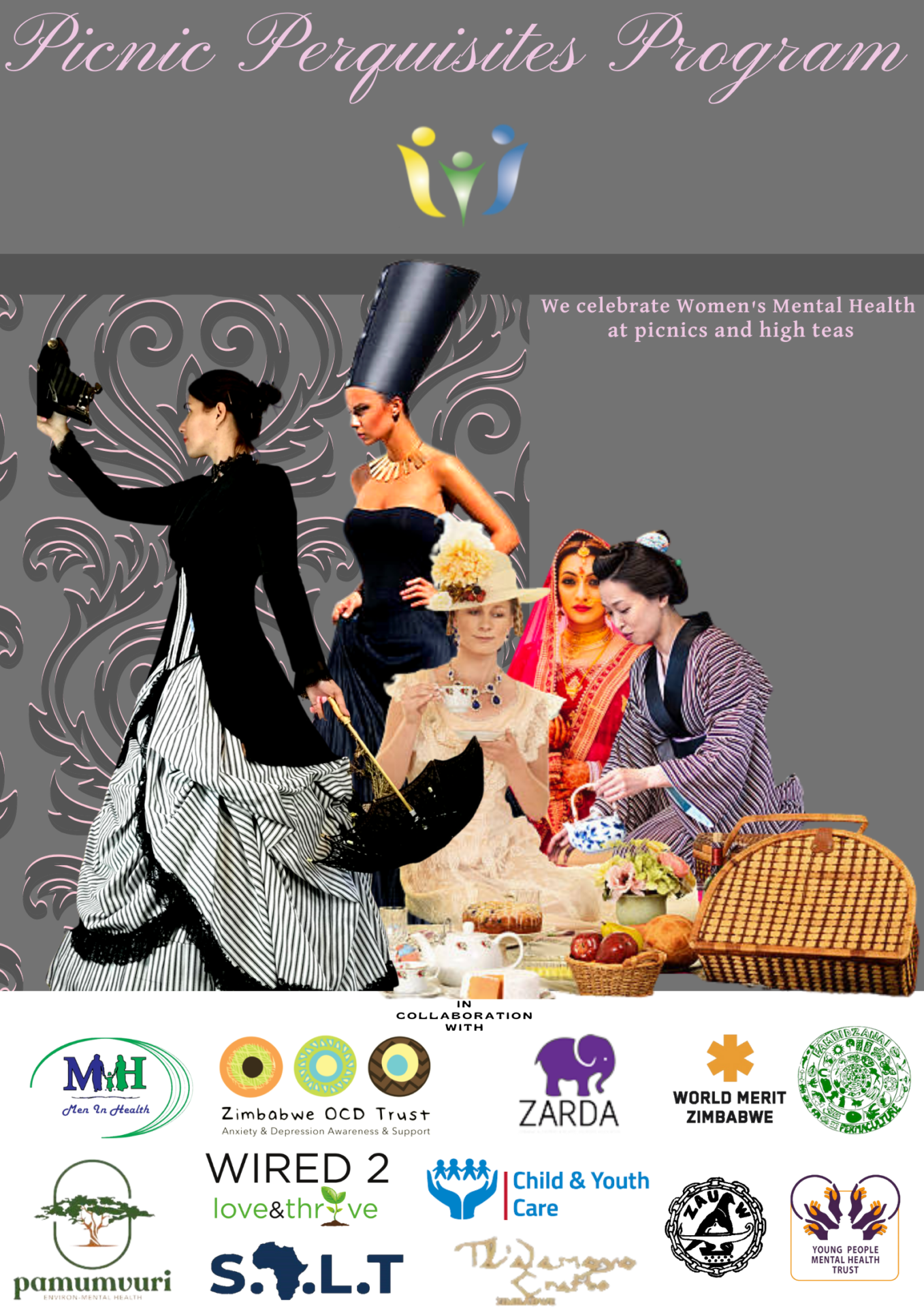
The Concept of the Picnic Perquisites Mental Health Support Program for Women by ASAC (Anxiety Support and Awareness Centre) will be presented to all stakeholders and beneficiaries on the 29th of May 2022. The event which was postponed from the 1st of May 2022 at Meikles Hotel, Harare will be held as a Hyflex meeting. ASAC will be partnering with Men In Health, World Merit Zimbabwe, Zimbabwe OCD Trust, Paidamoyo Crafts, ZARDA, Wired 2 Love and Thrive, Fambidzanai Permaculture Centre, Young People Mental Health Trust, Pamumvuri, S.A.L.T AFRICA, Child and Youth Care, ZAUW and other stakeholders such as University of Zimbabwe to celebrate women’s mental health. This activity will be a phenomenal event propagating our commitment to advocating for women’s mental health through sustainable goals. I encourage you to “diarise” this event !!!
INTRODUCTION & BACKGROUND
Zimbabwe is a developing country situated in the south-central part of Africa bordered by South Africa, Mozambique, Botswana, and Zambia. The landlocked country has a tropical climate with high plateau and mountains in the east. There are 8 rural provinces and 2 metropolitan provinces, which are further divided into 63 districts and 1200 wards. The majority of Zimbabwe’s economy comes from the service sector (65.8%), followed by industry (22.2%) and agriculture (12%). Zimbabwe’s informal economy is responsible for 60% of all income; the rate of formal unemployment is extremely high. Poverty is endemic in Zimbabwe: an estimated 70% of the population is living below the poverty line, and 34% are living in extreme poverty. Shortages in fuel, electricity, drought, and climate related events have drastically impacted the agriculture sector and inflation rates in recent years.10 Having experienced years of austerity policies, economic decline, and the 2008 hyperinflation crisis, Zimbabwe’s health system – which was once one of the most robust in the region – has suffered decreased government spending, high workforce emigration, and human rights violations. Zimbabwe has an estimated population of 14 million Zimbabwe is located in Southern Africa, An estimated 1.3 million (9.2%) people in Zimbabwe are living with some form of mental disorder. Statistics show that there are 91 390 mentally ill patients with 7 763 new mentally ill patients being recorded in 2014 alone. Global Burden Disease (GBD) Study, 2017 estimates a population prevalence of 0.1% for schizophrenia, 0.5% for bipolar disorder, 1.5% for major depressive disorder (MDD), 0.3% for epilepsy, 1.3% for alcohol use disorders, and 0.7% for drug use disorders. Suicide accounts for 1.8% of all deaths. Compared to the southern sub-Saharan Africa region, Zimbabwe has higher prevalence in MDD, which is more prevalent (2.4%) in the region. Within Zimbabwe, certain demographic groups display a higher prevalence of some conditions. Young adults (age 20-29) have a higher prevalence of bipolar disorder (0.9%), MDD (1.8%), alcohol use (3.0%), and drug use (1.9%), compared to older adults. The prevalence of MDD is much higher among adults over the age of 70. The rate of suicide in Zimbabwe is higher among men (26.9 per 100,000) than women (9.7 per 100,000), and is very high among older people (84.4 per 100,000). According to research 1 in 4 people worldwide will develop one or more mental disorder in their lifetime, with women and girls disproportionately adversely affected. The Anxiety Support and Awareness Centre (ASAC) through its Picnic Perquisites Program” in seeking to intervene within the mental health support space in Zimbabwe, and contribute to public health efforts in addressing mental health challenges.
KEY MENTAL HEALTH CHALLENGES
African societies and indeed Zimbabwe are generally patriarchal and the challenges of women and girls’ mental health remain complicated as little attention is given in addressing them. While identifying mental issues is hard enough, seeking help becomes stigmatising for women, increasing their vulnerability as they face other health problems ranging from discrimination, hate crimes, gender-based violence, intimate partner violence, rejection and financial instability. Society is judgmental on women which culminates in their loss of self-confidence, self-esteem and self- worth. Studies have proven that the average girl and the average boy have the same level of confidence until the age of 12. By the age of 14 girls will be significantly less confident as they transition into womanhood. Gender roles in particular create power asymmetries which exacerbate tension and conflict in relationships with the home and workplace and community. Psychologically women progressively are progressively made to feel and accept that they are inferior to their counterparts, creating a negative atmosphere on their growth and mental well-being. Since the onset of the Covid-19, women have borne the adverse psychological and mental brunt pandemic, disproportionately increasing their anxiety, depression, substance use, alcohol consumption associated with aggression, anger, irritability, eating disorders and numerous mental health conditions. For many women finding any kind of support structures or spaces has not been easy within their communities, homes and workplaces. Many have had to continue suffering in silence and often alone as often they are also expected to continue strong with their demanding and overburdening gender roles. (GBD) Study, 2017 estimates a population prevalence of 0.1% for schizophrenia, 0.6% for bipolar disorder, 1.8% for major depressive disorder (MDD), 0.3% for epilepsy, 1.0% for alcohol use disorders, and 0.6% for drug use disorders and 9.7 per 100,000 for suicide among women in Zimbabwe. Compared to the southern sub-Saharan Africa region, Zimbabwe has a similar prevalence of each disorder except MDD, which is estimated to be slightly more prevalent (2.4%) across the region. This difference is greater among females (2.7% regionally vs. 1.8% In Zimbabwe).
THE INTERVENTION
It has been scientifically proven that women do well in social groups as this increases their bonding and release of their feel-good hormones oxytocin and serotonin and inevitably good mental health, the perks that come with communing with other people. Anxiety Support and Awareness Centre (ASAC), will be exploring a cocktail of tools and approaches within an ecosystem of partners to address women and girls’ mental health and wellbeing. ASAC’s main intervention vehicle will be the Picnic Perquisites Program designed to mainstream into already thriving women and girls support initiatives as well as introducing new approaches and tools towards impactful and sustainable change. The program will aim at harnessing women’s gravitation to the rewarding effect of social support and social interactions. All activities will build on the principle of inclusion for all ages and statures. Picnic Perquisites will be rolling out activities that encourage better mental health awareness through Counselling, Capacity building basic coping skills, support groups for lived experiences and carers, Information dissemination, Outreaches, Webinars, Referral helplines, and Technological support for improved mental health mainstreaming in programs targeting women and girls.
EXPECTED RESULTS
Picnic Perquisites Program envisages Zimbabwean communities in which there is a reduction in mental health complications, improved capacity for coping with mental health issues at individual, family and community level, including the workplace. The Program seeks to contribute to the development of more supportive environments for appreciating the value of mental health, mitigate and reduce the problems faced by women due to lack of good mental health and empowerment, reduce stigma around mental health issues; and increase women’s mental health awareness in all communities in Zimbabwe. The statistics mentioned in this article were obtained form the Zimbabwe WHO Special Initiative for Mental Health Situational Assessment, 2020.
On the 29th of May we will have several lined up speakers coming just for you. The likes of the exceptional Zimbabwean Clinical Psychologist DR DEBRA MACHANDO the focal person for mental health for the World Health Organization. She is coordinating the Zimbabwe Special Initiative for Mental Health, a Ministry of health program, supported by WHO. Dr Machando is a pillar in academia, practice and advocacy for mental health in Zimbabwe. She is a motivational speaker and conducts mental health awareness programs to thousands through radio, TV and social media platforms. Dr Machando is former chairperson and board member of the Allied Health Practitioners Council and Health Professions Authority of Zimbabwe (2015-2020). She has multiple publications on mental health. Her passion and devotion to the service of her countrymen speaks through her work. She volunteered in the psychosocial intervention for Cyclone Idai trauma and was nominated into the Ministry of Health Covid-19 psychosocial support pillar and the Mental Health Tribunal Board. Dr Machando volunteers for Kushinga, an NGO for research and mental health advocacy. Her sterling achievements in the field of mental health in Zimbabwe are truly admirable! DR NYARAI PAWENI, ND, MSM, BA is Founding Director of Sage ReStorative Health, which is built on the tenets of naturopathic medicine. Her private practice is focused on life-style/functional/holistic medicine. In order to make a meaningful impact in the world and our lives, Sage ReStorative is all about enhancing wellness by focusing on holistic health, first prioritizing well-being in all its forms. She is also co-founder of WIRED 2 love & thrive, a social enterprise focused on mental wellness with an African sensitivity and sensibility. She amplifies her work through the Natural Therapist Council of Zimbabwe (NTCZ) and Traditional Medicine Practitioners Council of Zimbabwe. (TMPC) through webinars, workshops, articles TV/Radio and print publications. Dr Nyarai is a seeker by nature, lover of laughter, words, meditation, music, dancing, travel, concerts/festivals, markets, nature, family/community. JANET WOOD from ZARDA known for her impactful work in helping people with dementia will bethere. She joined ZARDA in 2004 and having held several roles in the organization she became Chairperson in 2010 to date. position She is a Zimbabwean born in Rusape and educated in Mutare. She has Secretarial background and worked at Air Zimbabwe for 7 years and then became a full time mother when her son was born in 1981. She is recently widowed after 46 years of marriage. Jan has one son and two grandsons. ZARDA is a small growing organization thanks to a group of dedicated volunteers. ZARDA is a full member of Alzheimers Disease International – the umbrella body of 105 associations around the world. ZARDA offers information support, training and activities for people living with dementia and has 2 branches in Harare and Bulawayo. PAIDA MUDZAMBA the Founder of ASAC Trust and also an Executive Member of the Global Mental Health Peer Network. Paida is an experienced research assistant with demonstrated history of working in hospitals and healthcare industry. She is a holder of a BA in Health Sciences & Social Services with a specialisation in Applied Psychology. Paida also holds executive certificates in Monitoring and Evaluation, Project Management, Diplomacy, Palliative Care and Disaster Management and Counselling. Paida has great affection for those who are challenged and highly motivated to make a difference in the world especially through mental health wellness. She applies effective altruism in her daily life to minimise psychological inertia. She believes in cause neutrality amongst many other good notions to drive her moral compass. She enjoys amongst many hobbies being an amateur astronomer, violinist, artist, poet and nature lover. ANGELICA C MKORONGO is the Founder of Zimbabwe OCD Trust, an Organisation that raises awareness and support for people with Obsessive Compulsive Disorder and associated disorders in Zimbabwe. She is also an Executive Member of the Global Mental Health Peer Network, and served as The Regional Representative for Africa for one year. She is a member of the Mental Health Humanitarian and Emergencies Mental Health Psychosocial support Response Taskforce of Zimbabwe under the Ministry of Health and Childcare, mental health department. Angelica is also member of the Federation of people with disabilities in Zimbabwe and Pan African Network of Persons with Psychosocial Disabilities. Angelica is also the Chairperson of the National Association of Persons with Psychosocial Disabilities. TENDAI CHATIKOBO the Founder of the T5 foundation. Tendai is also a Founder Member of Family of Hope Trust . She is the current Harare West Coordinator for WHISPERS and British Council Agile Mentor. LEWIS MASHINGAIDZE the Executive Director at Fambidzanai Permaculture Centre. Lewis Kudzanai Mashingaidze stresses and promotes the importance and role of Agroecology in addressing climate change. As such this discipline has multiple benefits including increasing food security and resilience, boosting livelihoods and local economies, diversifying food production and diet. The Diploma in Agroecology was rolled out in 2017 to respond to the climate crisis and the current unsustainable agriculture system by creating a critical mass of trained professionals including women in Agroecology that would influence a change in agriculture extension systems. DR MARIA MAFUNGA the Founder and CEO of Quality Junior School.She has a PhD in Strategic Management (UCL), Masters Degree Specializing in entrepreneurship and Innovation ( UNISA), Undergraduate Degree in Economics from the University of Zimbabwe (2002). She also holds ICSAZ Diploma (Chartered Institute of Secretaries and Administrators in Zimbabwe) 2004. She recently acquired a Diploma in Child Counselling from the University of Zimbabwe. She is a passionate mother of 3 girls and a boy, two of her children are attending school at Quality Junior School. AMBASSADOR DR HONOURABLE FAITH K. NYAMUKAPA FellP, DHL, IIP, DBL, IWU has represented the country in various ways on different platforms locally, regionally and internationally since 2016 to date. She has attained over 90 awards and recognitions as part of her achievements. She has sacrificed most of her time and financial resources to expand the work she does and reaches out even to the rural communities over the past years. Her desire is for one day to see the expansion of her work to several other places in Zimbabwe and Africa through financial support. She is into Education and Training, Capacity building, Women Empowerment, Youth Empowerment, Community Development, Livelihood programs, Early Childhood Development and Community initiatives locally and regionally which include the support of children, the girl and boy child and livelihoods. She is also the Executive Director for Kinder Care Zimbabwe. Last but not least PROFESSOR JORDAN B. PETERSON PhD a Professor of psychology at the University of Toronto, a clinical psychologist and the author of the multi-million copy bestseller 12 Rules for Life: An Antidote to Chaos, the #1 nonfiction book of 2018 in North America, Europe, Australia, and New Zealand. It has been published in over 50 languages and has received worldwide acclaim. One in a group of clinical and research psychologists from the University of Toronto and McGill University who are distributing tools that will improve psychological and physical health to interested individuals everywhere including the SELF AUTHORSHIP SUITE and UNDERSTANDING MYSELF PERSONALITY ASSESSMENT. “The most influential public intellectual in the western world right now.”— The New York Times. The Master of Ceremony VOVA A CHIKANDA the Founding member and current Chair of the the Zimbabwe Institute of Diplomacy, Former Deputy Ambassador to the UN Assures Support to the UZ Ambassadors Forum.
To purchase the tickets for this event you can follow the link below or contact us for assistance. Lets celebrate women’s mental health together. We hope to SEE YOU THERE in person or virtually.
BOOK A SPOT AND PURCHASE YOUR TICKETS ON THESE LINKS:



Leave a Reply